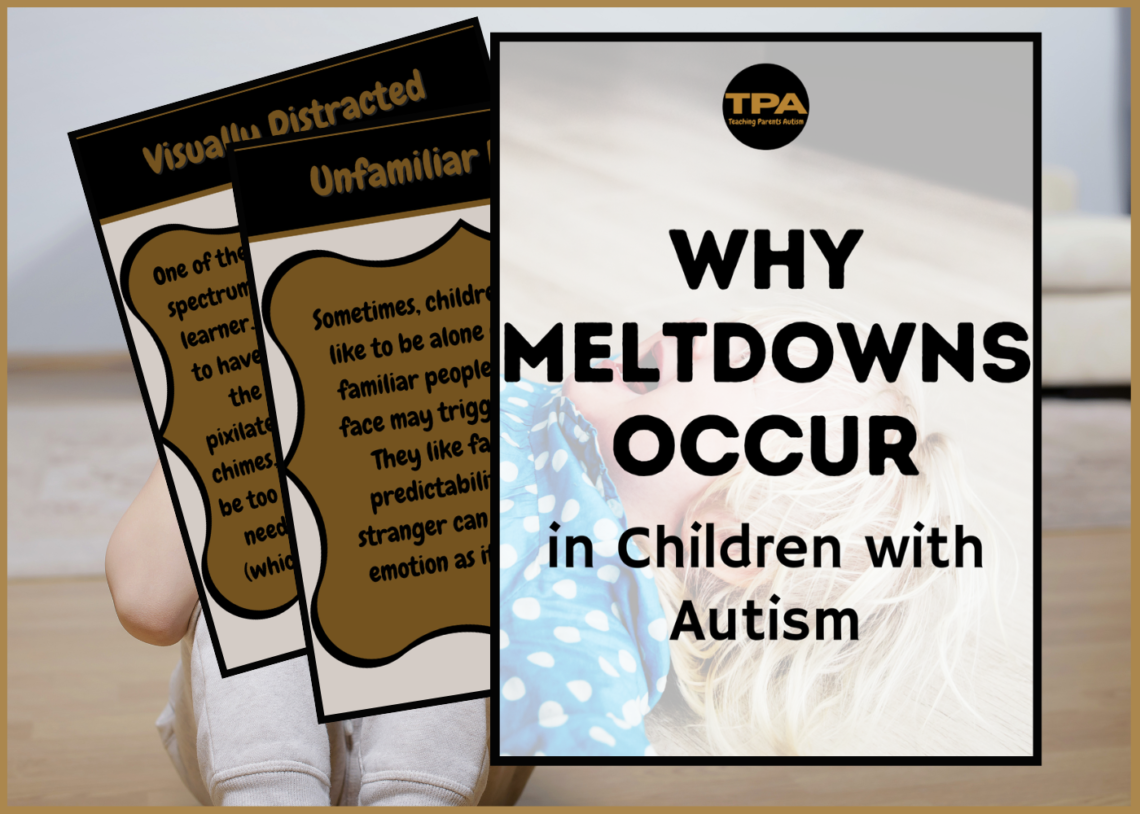
Why Meltdowns Occur in Children with Autism
Written By Quennie Lim
Meltdowns can be intense and emotional, but they are not simply bad behavior. In many cases, they are a child’s response to feeling overwhelmed, distressed, or unable to communicate what they need.
Understanding Meltdowns
Meltdowns can be overwhelming for both children and parents. Understanding why they happen is one of the most important steps in supporting your child with patience, empathy, and confidence.
A meltdown is a strong emotional reaction that is difficult for a child to control. It may begin with small signs of distress, build up quickly, reach a peak, and then gradually decrease once the child starts to feel safe and regulated again.
Some meltdowns last only a few minutes. Others may continue for a longer period, sometimes even an hour or more. In some cases, a child may have repeated meltdowns caused by the same trigger.
Common Reasons Why Meltdowns Happen
Many children with autism feel safest when life is predictable. When routines change without warning, it can feel confusing and stressful, which may lead to a meltdown.
Some children may struggle to express what they want, need, or feel. When communication is difficult, frustration can build up quickly and come out as a meltdown.
Bright colors, busy walls, cluttered spaces, or too many visual details can feel overwhelming. A child may have trouble processing everything they see at once.
Crowded spaces or unfamiliar people can be stressful. Some children feel more comfortable with a small group of familiar people and may become overwhelmed in social settings.
School, therapies, tutorials, and other activities can become exhausting. Even helpful activities can feel overwhelming if a child does not have enough rest or downtime between them.
Sounds like construction noise, horns, thunder, crying, or even loud conversations can be distressing for children who are sensitive to sound.
Sometimes the cause is very basic. A child may not be able to say, “I’m hungry,” “I’m tired,” or “I need rest,” so those needs show up through behavior instead.
Headaches, stomach pain, toothaches, or general discomfort can trigger a meltdown, especially if the child cannot clearly identify or communicate the problem.
Many children with autism have sensory processing differences. They may need movement, quiet time, or short breaks to regulate their bodies and emotions before returning to a task.
Final Thoughts
Meltdowns are a form of communication.
When we look beneath the behavior, we often find stress, confusion, discomfort, or unmet needs. The more we understand these reasons, the better we can support children with autism in ways that help them feel safe, understood, and cared for.
Every child is different, and learning what triggers your child’s meltdowns can help you respond with more confidence and compassion.
💛 If you found this helpful, please share it with other parents.
Together, we can build a stronger understanding of autism and support more families.


You May Also Like
How Autism Affects Communication
How To Make Your Child Follow Instructions